This piece was written from journal entries kept during a few weeks in Sri Lanka’s southwest. Names, places, and moments are left largely as they were.
This story takes stylistic inspiration from William Finnegan’s Barbarian Days and its approach to surf, travel, and memory.
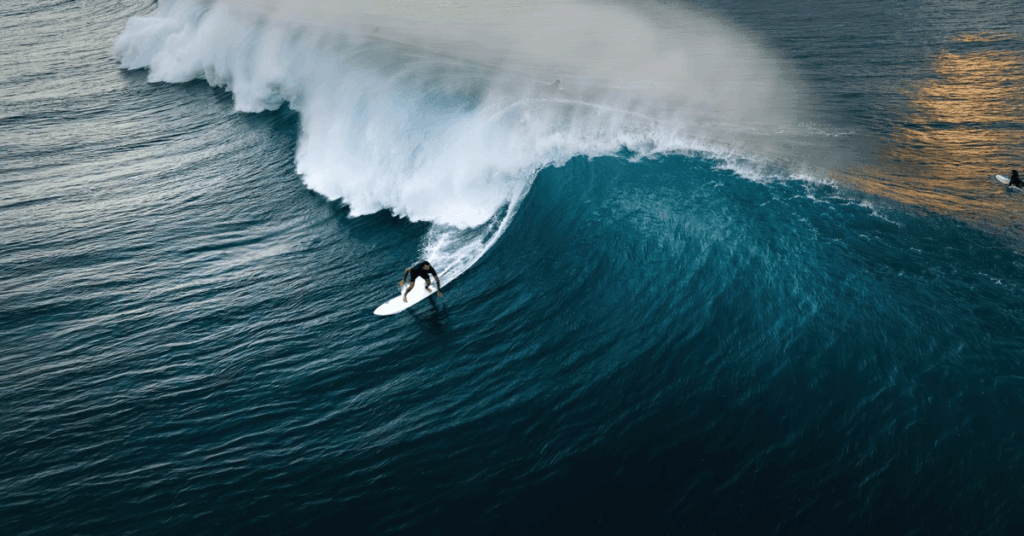
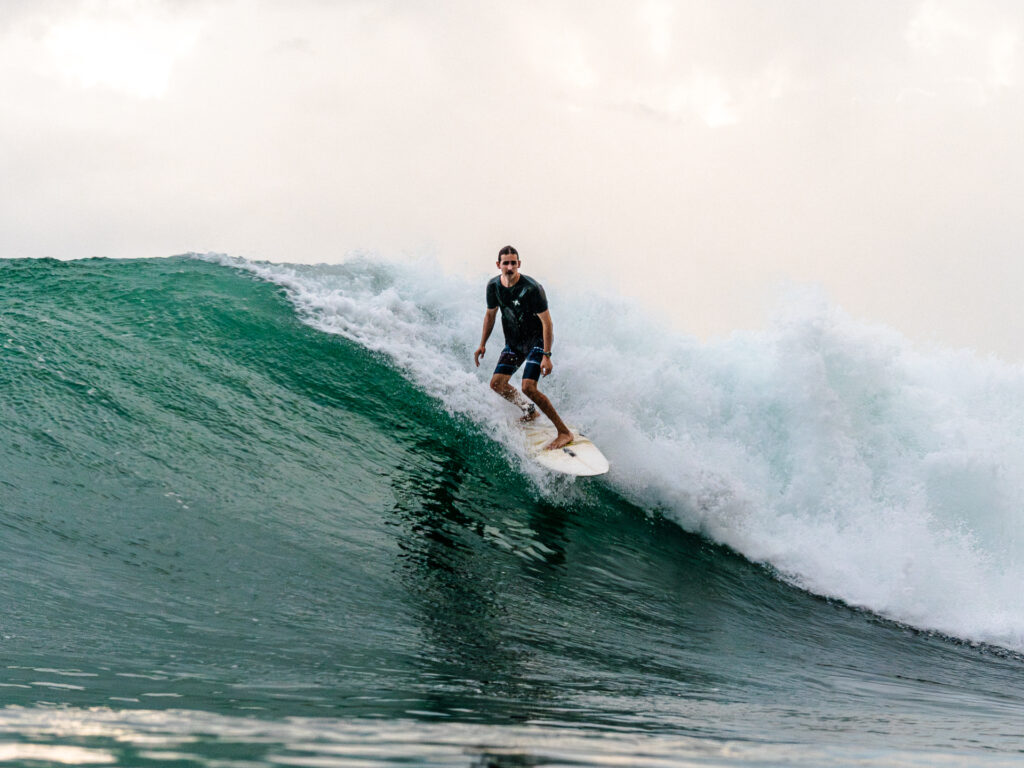
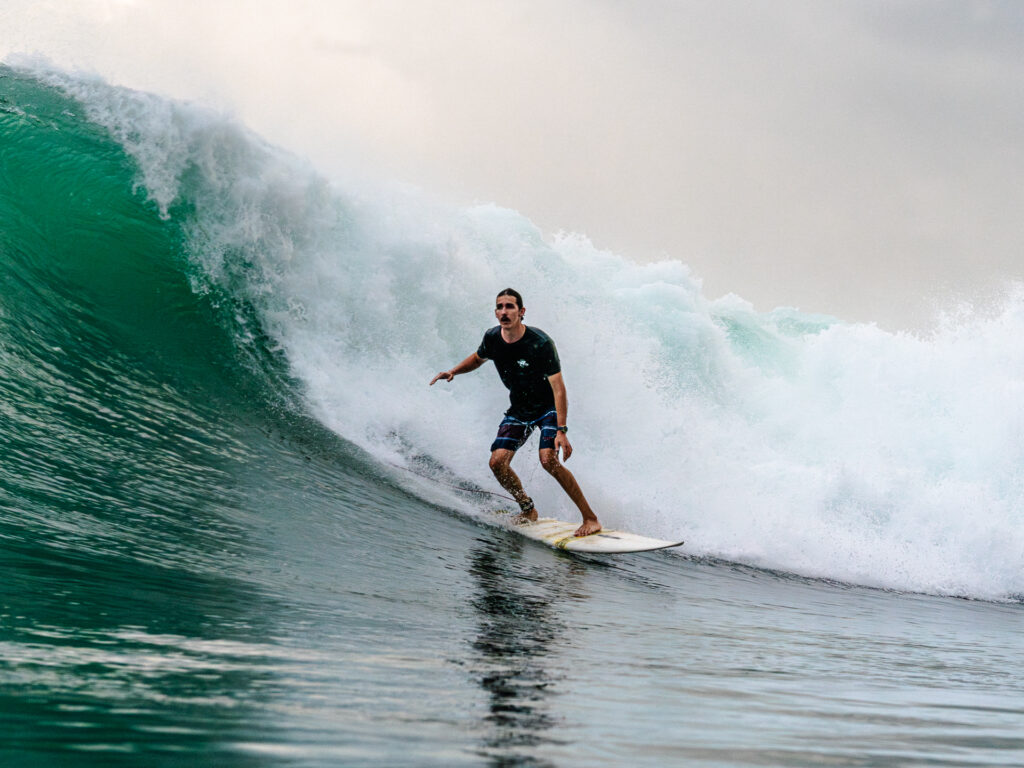
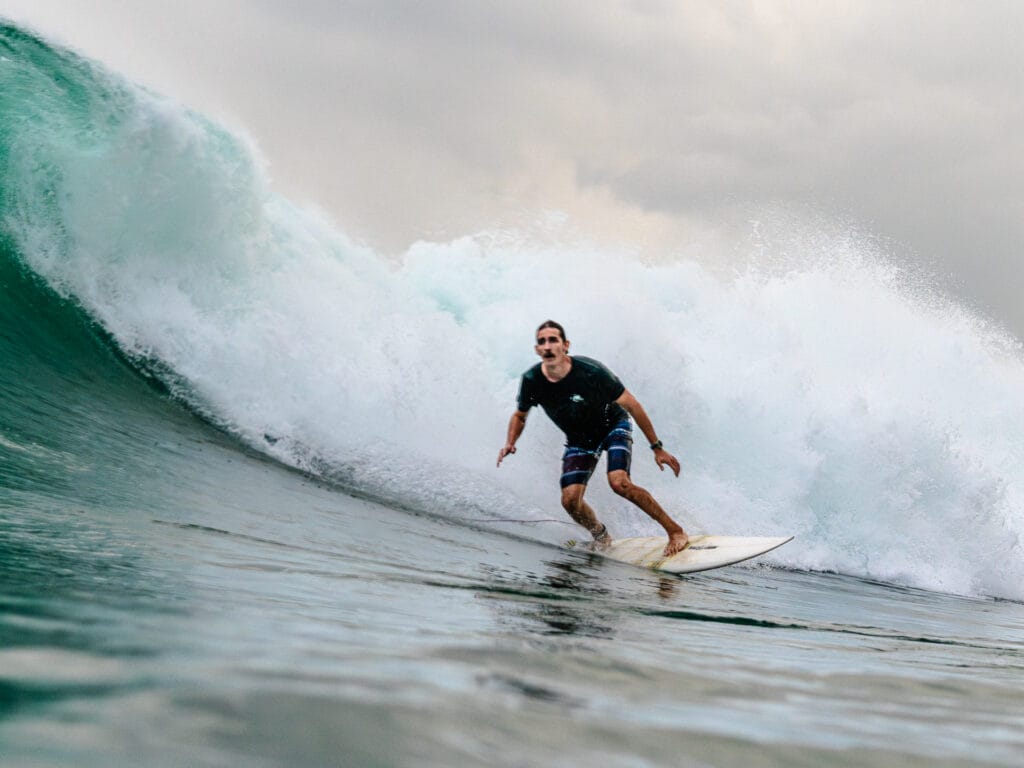
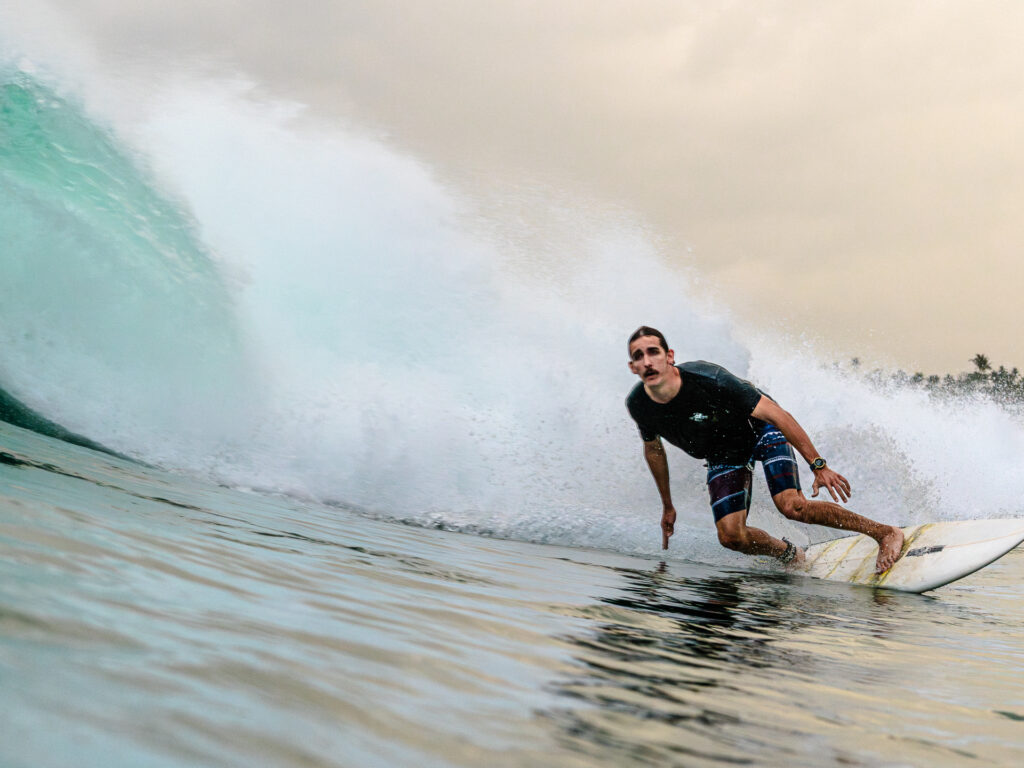
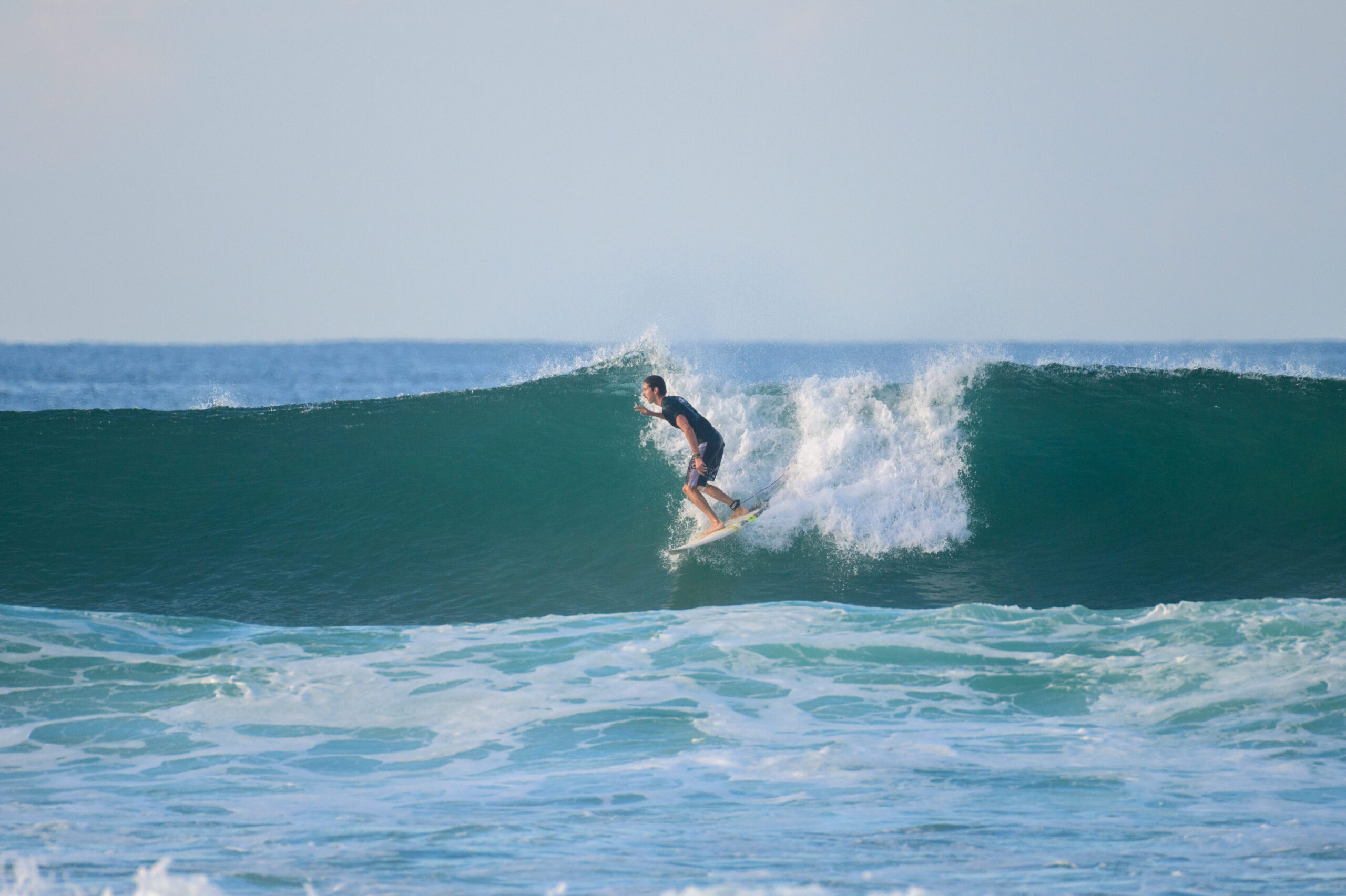
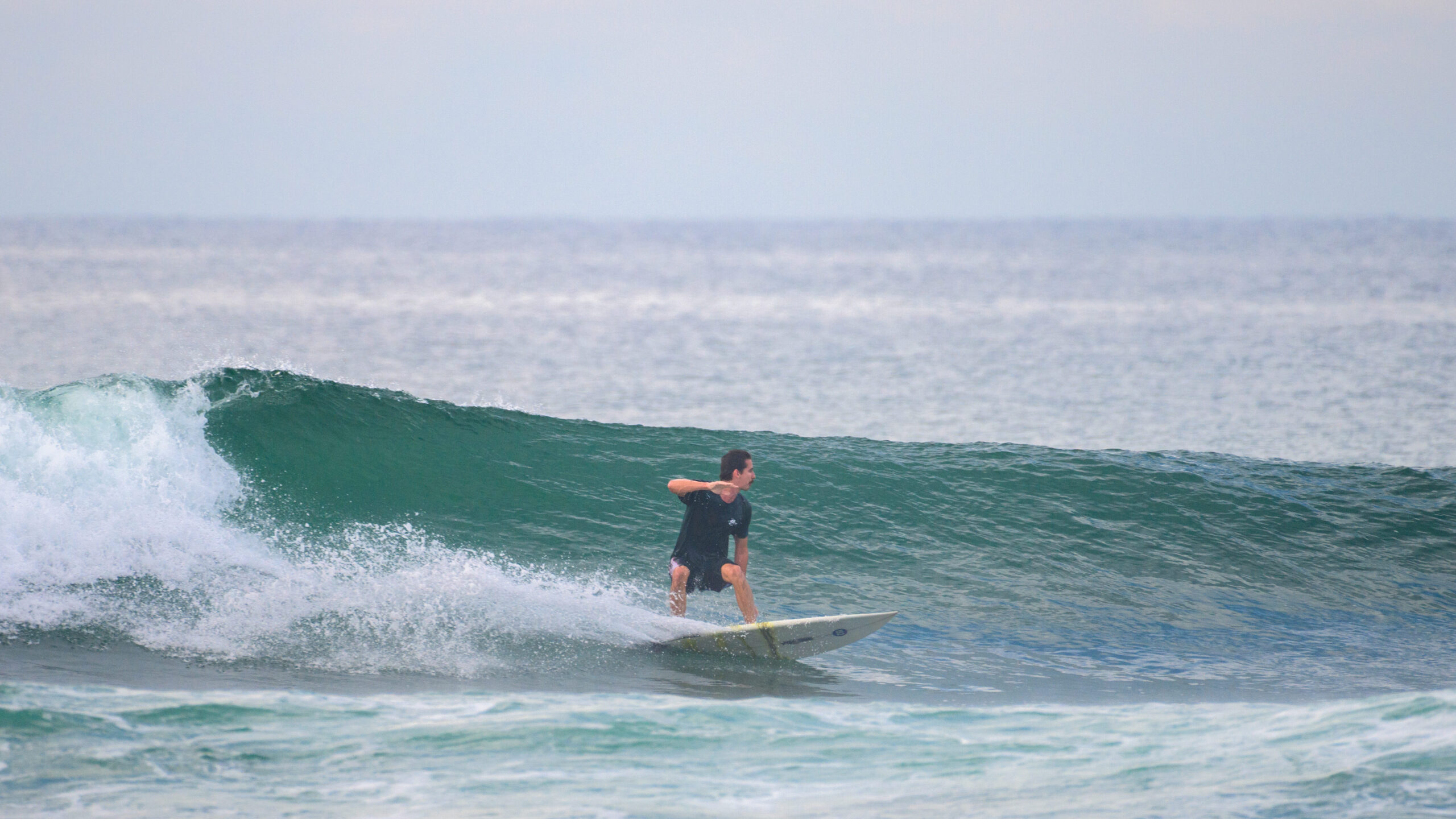
As the swell filled in, uncertainty crept in. I’d surfed this break several times before, but never like this. And where was everyone else? It didn’t matter. I trusted instincts formed over years in the water. A shallow reef sat beneath me, close enough to feel, but I kept reminding myself the wave broke similarly to home. I waited. Forty minutes passed. Eventually, surfers began to appear on the shoreline. One by one, they jumped from the rocks. Once the first waves came through, the tension eased. The lineup filled slowly, naturally.
It’s always tricky arriving at a new destination, but after a few days I’d begun to learn the breaks. This one couldn’t handle much more swell, but that afternoon was exactly what I’d hoped for before coming to Sri Lanka: overhead waves, minimal crowd, a sky softening into sunset. The kind of session that stays with you longer than most.
You can read endlessly online about surf breaks, but nothing replaces time in the water and the quiet education that comes from watching locals move. That became my approach in and around Midigama – observe first, act second.
Before the quiet charm of Midigama, Belle and I had moved through the noise and friction of Colombo. The airport and its surrounding streets reminded me of Kathmandu; chaotic, loud, relentless, but the fog of a full day’s travel dulled the edges. It felt like we blinked and were suddenly in bed at our Colombo accommodation. Despite arriving early at the train station the following morning, we still almost missed our train. Incorrect directions and general confusion pushed us into a moment that felt absurd in hindsight; climbing down onto the tracks and crossing between trains to reach our carriage.
Eventually, we settled into the hot, stuffy carriage bound for Sri Lanka’s southwestern coastline. The journey unfolded like something cinematic. People hanging from open doorways. Windows wide open, the air rushing through. The railway line tracing the coast just metres from the water. Even through fatigue, it was impossible not to take it in.
The train slowed and stopped, somehow, at our station. A small platform surrounded by jungle, the ocean only steps away. We stepped off unsure, lugging Belle’s oversized backpack north toward our accommodation. My bag was still delayed by Air India, which left me looking anything but like a surfer. I walked the beach in Nepalese hiking shoes. It didn’t matter. We found Ocean Vibes Ahangama and settled in quickly.
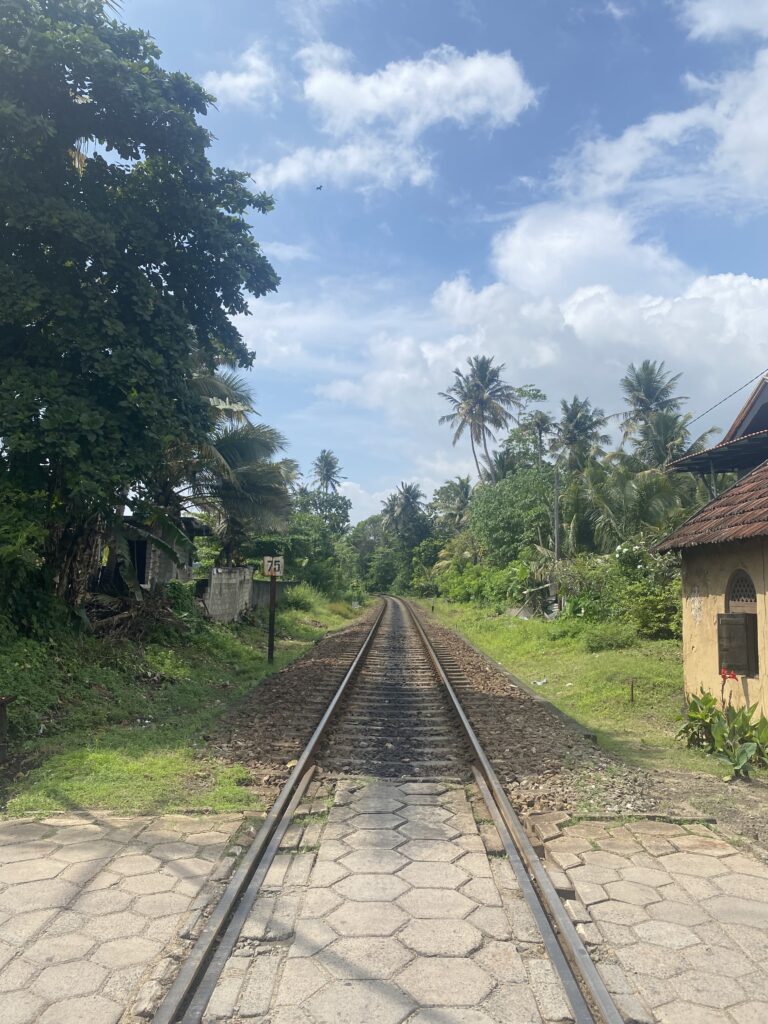
Midigama felt like a step back in time. Perhaps what Bali once was. The pace was right. Wake when you feel like it. Surf. Eat. Rest. Surf again. Ocean Vibes lent itself perfectly to this rhythm. It sat just far enough from the town centre to feel quiet, and from the back of the property we could paddle out from the rocks to Lazy Rights. Our second stay at Kuzma’s Lazy Left offered the same intimacy with the ocean; this time opening access to Lazy Left and Rams. There’s something about paddling out from rocks. A small sense of adventure. Risk balanced carefully against reward.
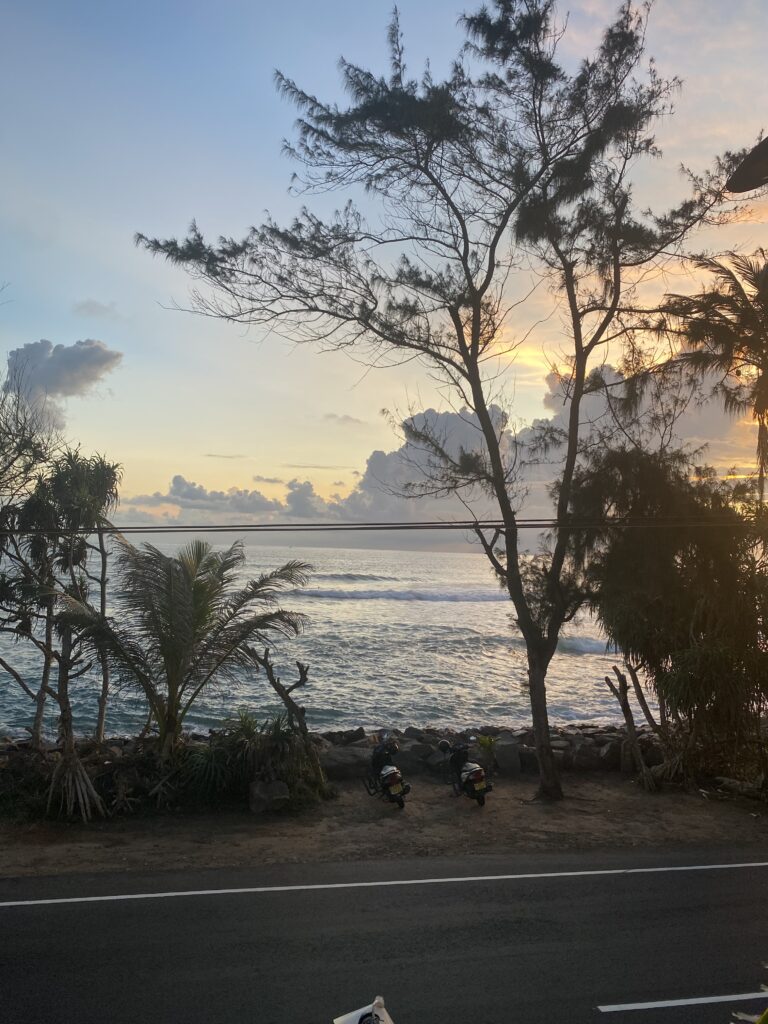
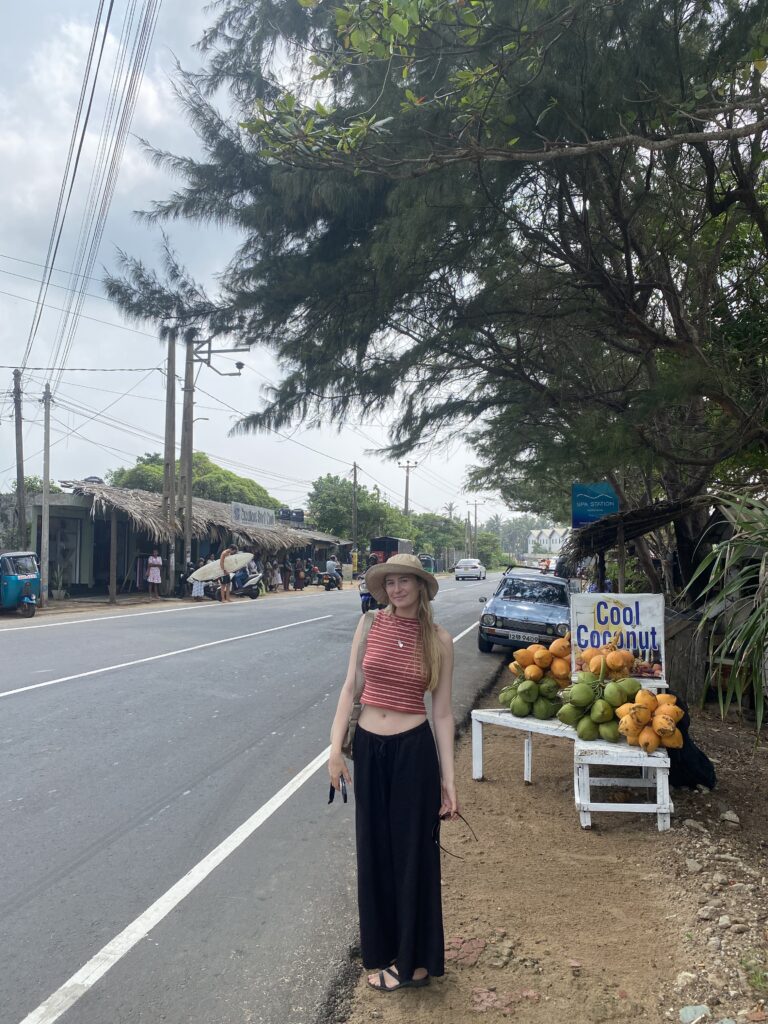
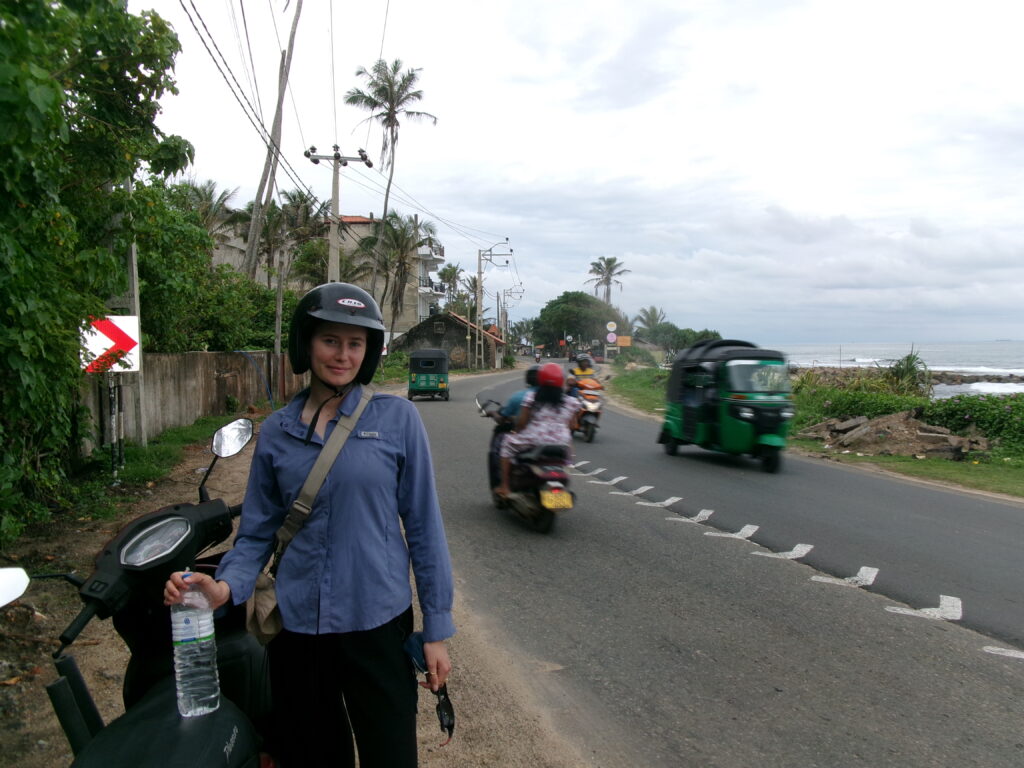
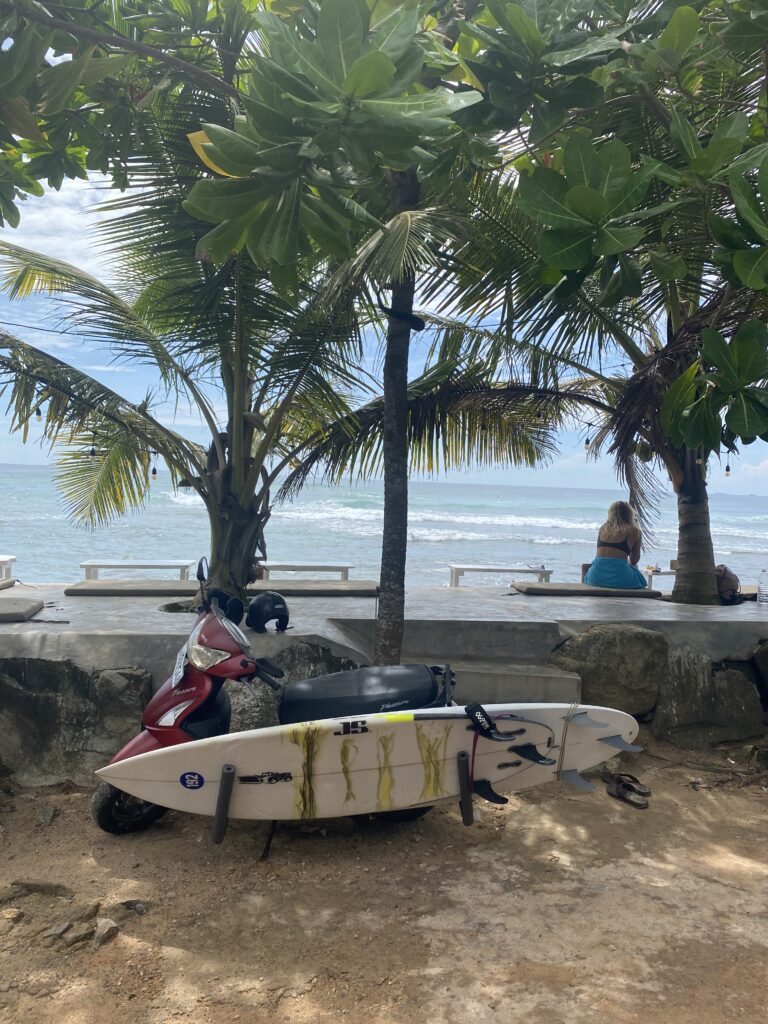
The town stretched along a single coastal road, leaving it little choice but to become a haven for surfers and ocean lovers. We rode that road daily on our scooter; sometimes chasing waves, other times just watching life unfold. The sight of roadside stalls dominated the peripheral: coconuts, roti, fruits. Busses ruled the road, barely braking as they crossed into oncoming traffic, forcing scooters and tuk-tuks onto the shoulder. By the end of our stay, it barely registered.
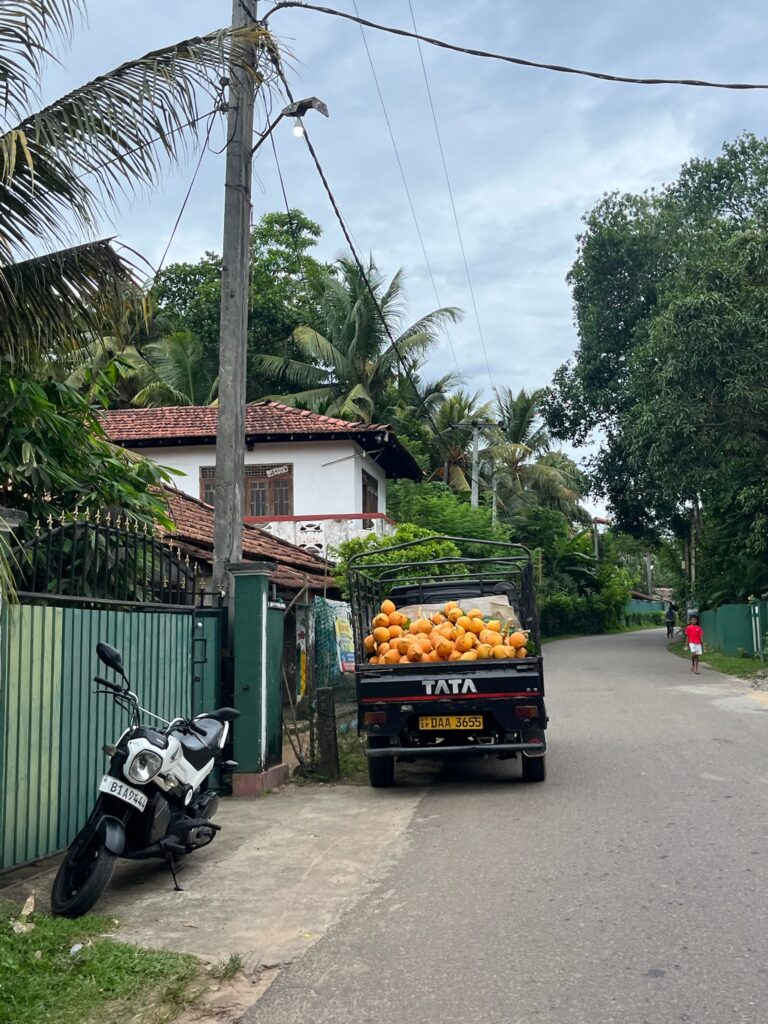
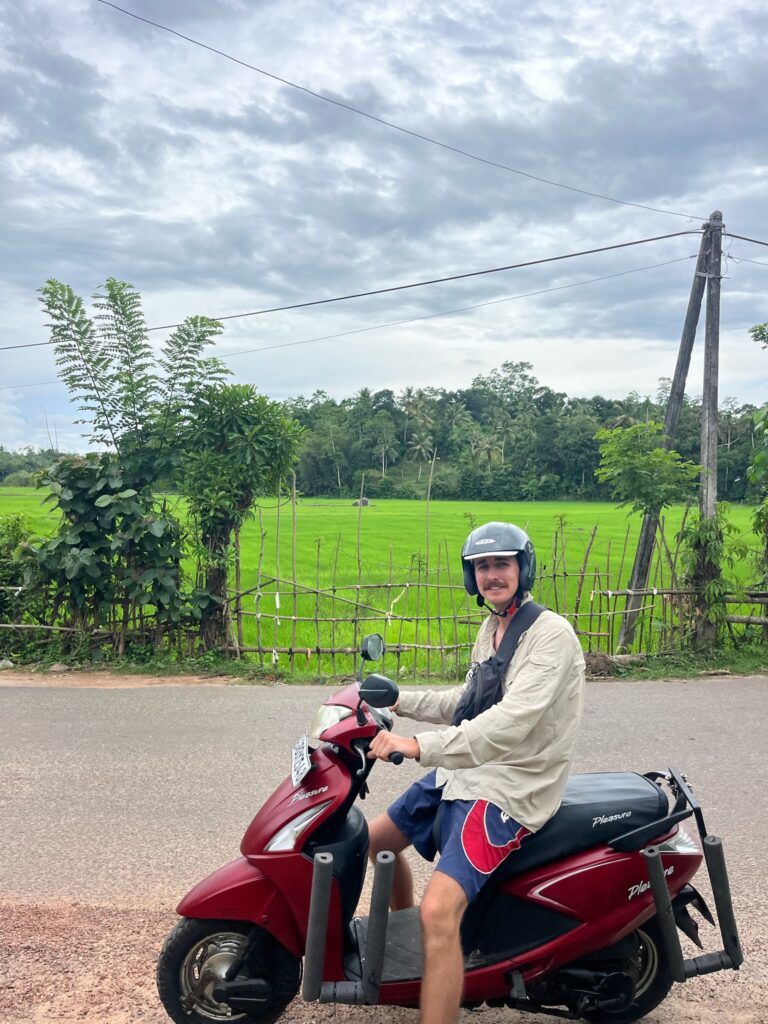
We didn’t stay confined to Midigama. We travelled as far west as Mirissa and north through Ahangama and Cabalana. Inland, the pace slowed further. Rice fields stretched outward. Children walked to and from school. Small family-run shops spilled onto the roadside. It felt unpolished and honest.
Off the board, the generosity revealed itself more quietly. One morning after a surf at Lazy Rights, we paddled in and entered our accommodation. The owner appeared with a knife and a pair of red coconuts, cutting them open with practiced ease. We drank straight from the shell, salt drying on our skin, the sweet, earthy taste cutting through the heat. He spoke little English. There was no sense of transaction in it, just a simple extension of care.
Community in Sri Lanka felt instinctive. It didn’t matter where you were from or how you surfed, everyone shared the water. There were, of course, the more serious crews, but the atmosphere remained calm. Friendly. Open.
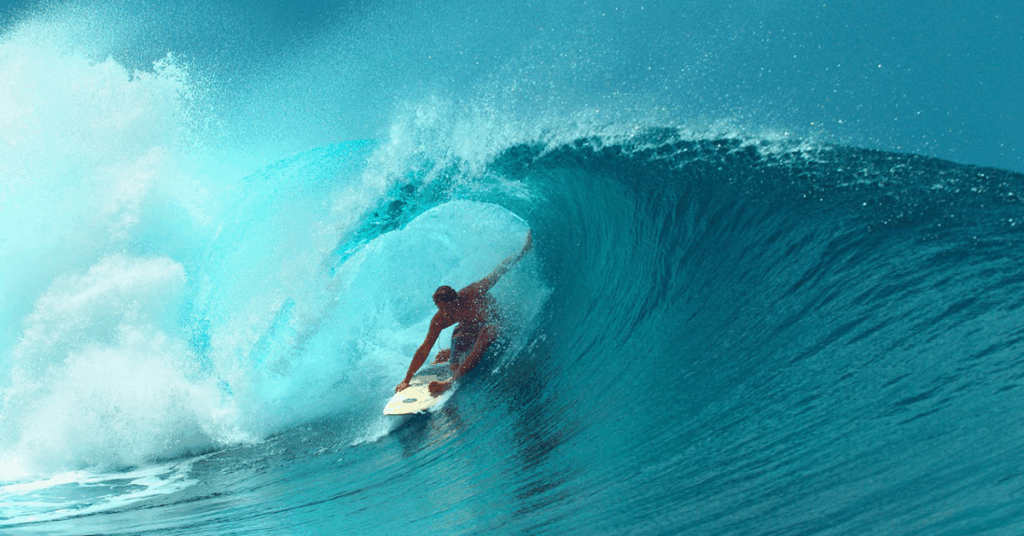
Watching Belle’s progression became one of the most grounding parts of the trip. Day after day in the water, navigating reef breaks, her confidence grew. Scoring a good set wave always feels rewarding, but watching her do so came close to surpassing it. Helping Belle shifted my own mindset. The competitive instinct softened. Surfing returned to its simplest form; a raw, natural phenomenon. Waves travelling thousands of kilometres, only to be ridden for seconds.
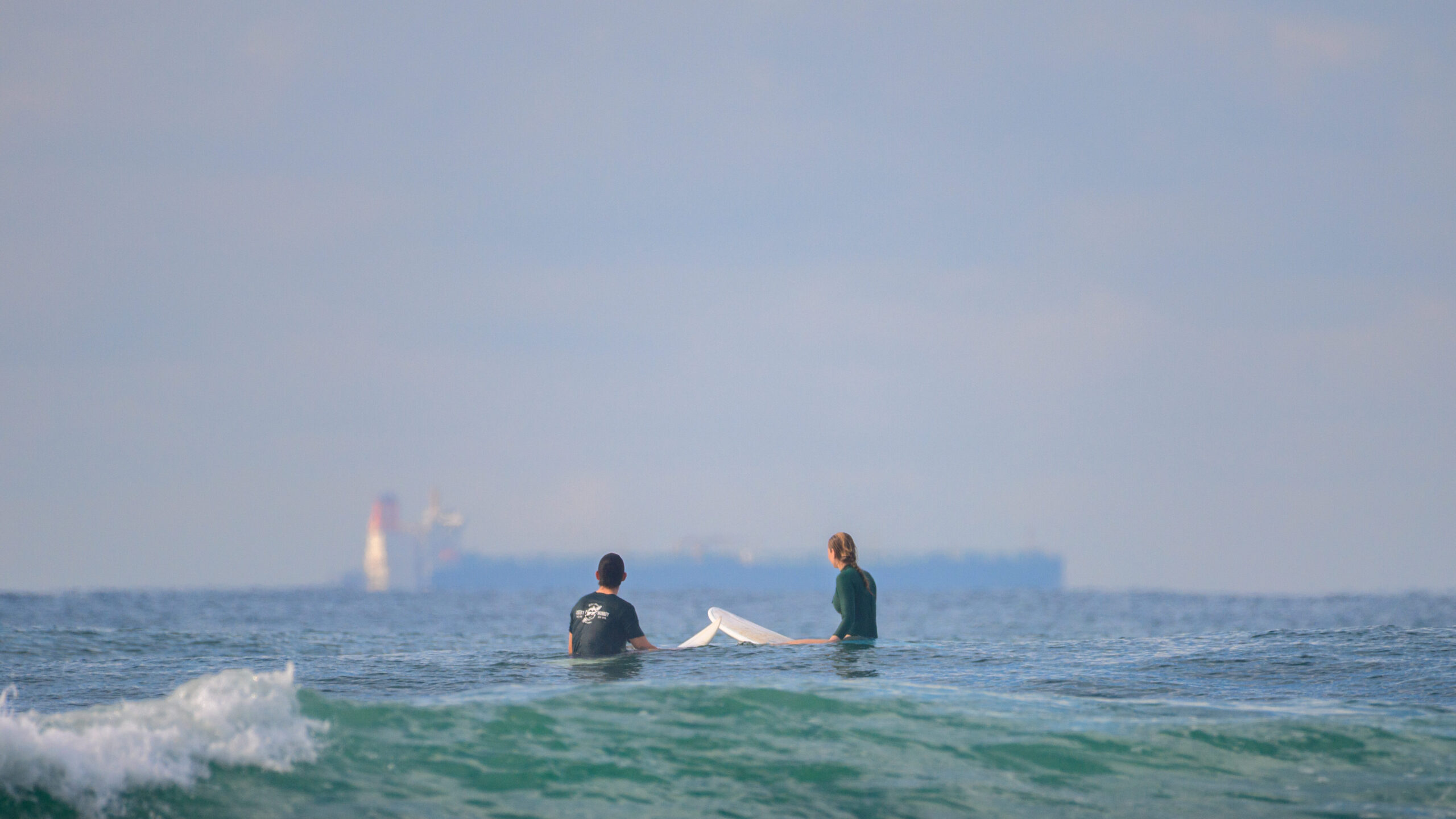
The French presence in Midigama was unmistakable. Their accents carried across the lineup, and at times, with my eyes closed, I imagined cooler water and the beach breaks of Hossegor. Alongside them were the Sri Lankan locals, many of them kids. Their energy and willingness to push each other made for an entertaining and hopeful sight; an emerging surf culture finding its footing.
Among the many people we met, Belle and I found ourselves most drawn to Rana and Ruben, a couple from the Netherlands. We met them on a heavy afternoon at Lazy Rights, far from lazy that day. We traded overhead waves, genuinely stoked for each other, until I cracked my hire board mid-session. I assumed that was the end of it, but our paths crossed again.
As our time wound down, we shifted focus north toward Ahangama. Rams and the Lazy breaks had given us plenty, but Ahangama held something different. The streets buzzed with tuk-tuks and cafes, a more Western energy. Yet beyond the noise, shoreline reef sheltered beautiful waves.
It was Rana and Ruben who suggested Animals – a spot absent from the internet but well known locally. We rode through the dark, parked near Le Cafe, and paddled out through a narrow keyhole. Reef and fisherman’s poles framed the entry. Beyond it, we found what we’d hoped for: quiet crowds, fun lefts and rights, shared stoke.
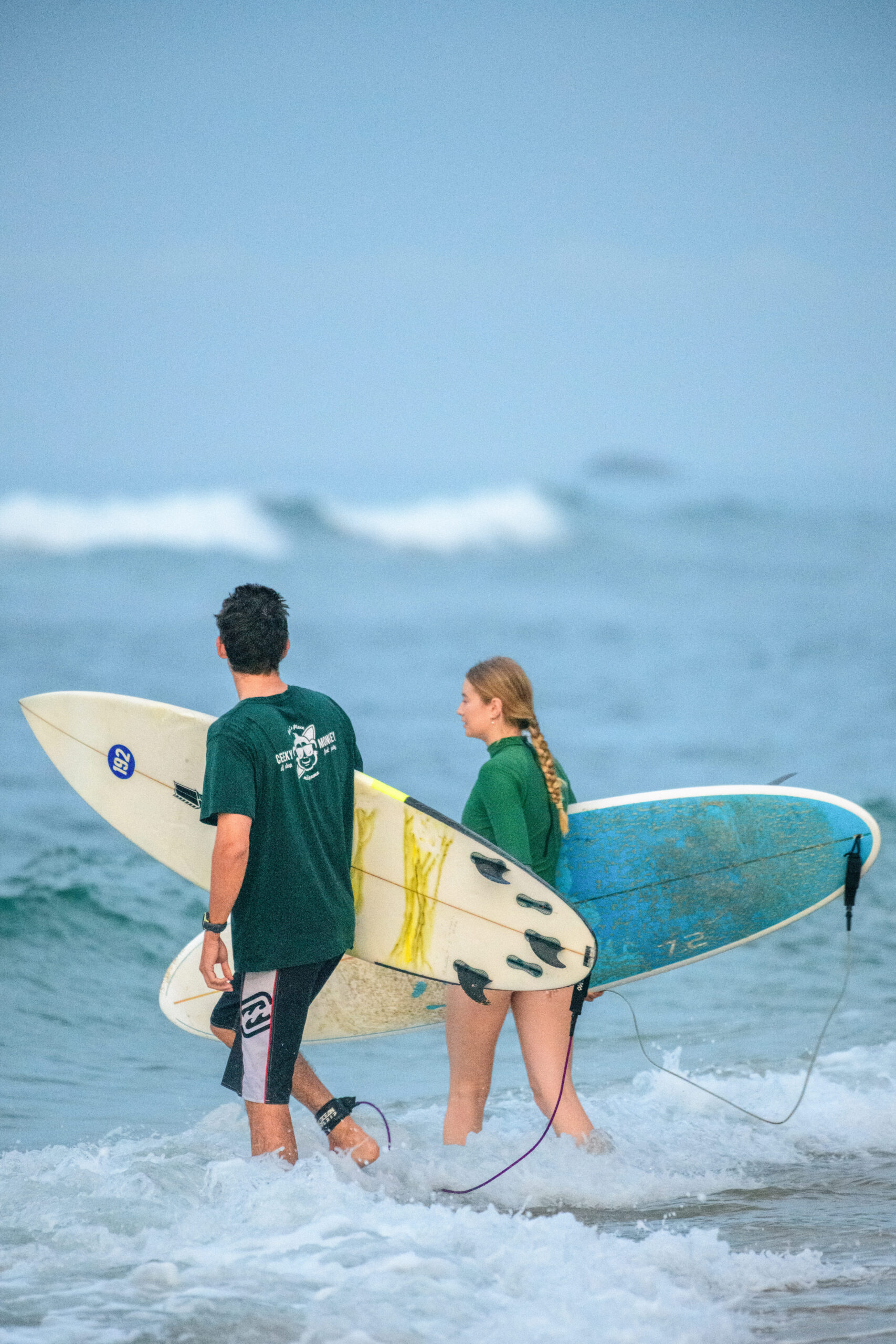
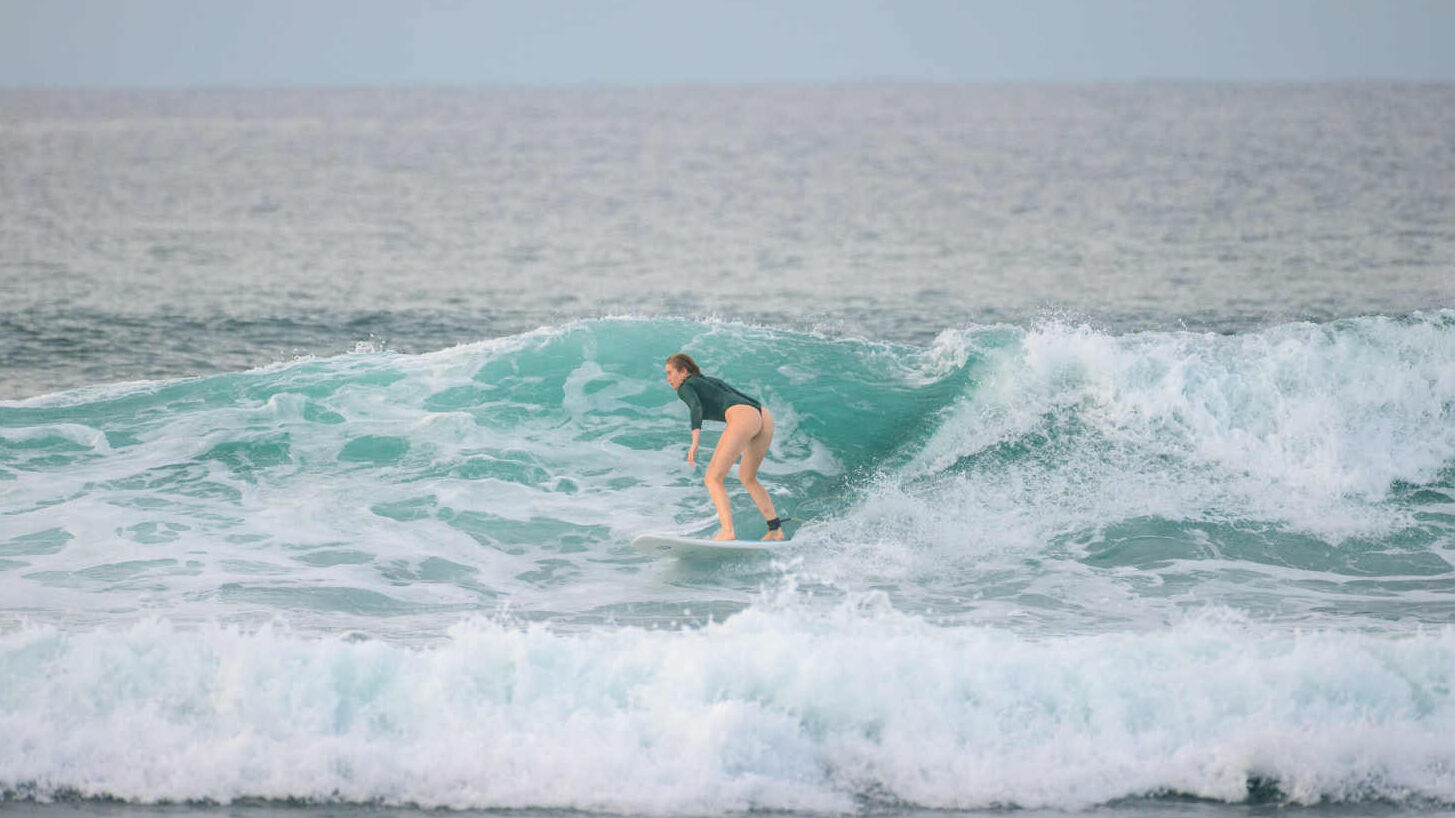
Le Cafe became a morning ritual. After surfing, we perched above the rocks, boards drying nearby, salt still clinging to our skin. Strong coffee arrived first. Breakfast followed. We traded stories of life back home and on the road – Indonesia, Europe, plans half-formed and others already fading. Conversations stretched longer than intended, often requiring several coffees before we finally stood to leave.
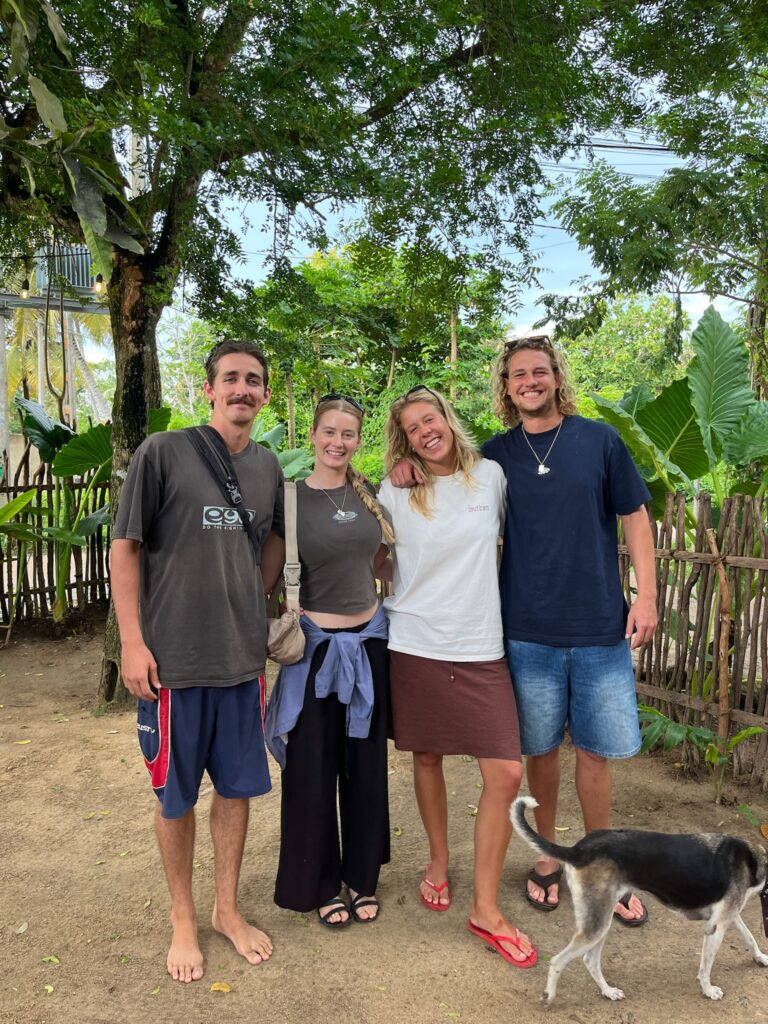
On our last few mornings, nothing changed much at all. We surfed early, drank coffee slowly, and let the day arrive on its own terms. When we finally left Midigama and headed back toward civilisation, the ocean carried on behind us, indifferent and familiar, as it had been each morning before.