In September 2024, I analysed how leading surf brands ranked for four core wetsuit related keywords. Eighteen months later, I have revisited the same terms to see what has changed, who has gained visibility, who has slipped, and what this tells us about SEO strategy in the surf industry.
Looking at rankings over time gives a clearer picture of which brands are investing in evergreen content, which are strengthening product optimisation, and how Google is interpreting search intent across commercial and sustainability focused queries.
All data below is sourced from Ubersuggest and filtered for the Australian market.
Surfing wetsuit
“Surfing wetsuit” remains a broad, high intent term that sits between informational and transactional search. Because it is generic, brands that rank well here typically have strong domain authority, clean site architecture, and well structured category pages. Movement in rankings for this keyword often reflects overall SEO health rather than a single page update.
As of February 2026, “surfing wetsuit” receives approximately 590 monthly searches, making it the highest volume keyword in this review. With a CPC of $1.32, there is clear commercial value attached to the term. Its SEO difficulty sits at 20, which tells us it is competitive but still achievable for brands with solid technical foundations.
The current top five results are:
Wetsuit Warehouse and O’Neill remain dominant from 2024, which reinforces how important strong foundations are for head terms like this. What is interesting, though, is the mix. Retailers, brands, and editorial publishers are now coexisting on page one. The presence of The Inertia suggests Google is not treating this as purely transactional anymore.
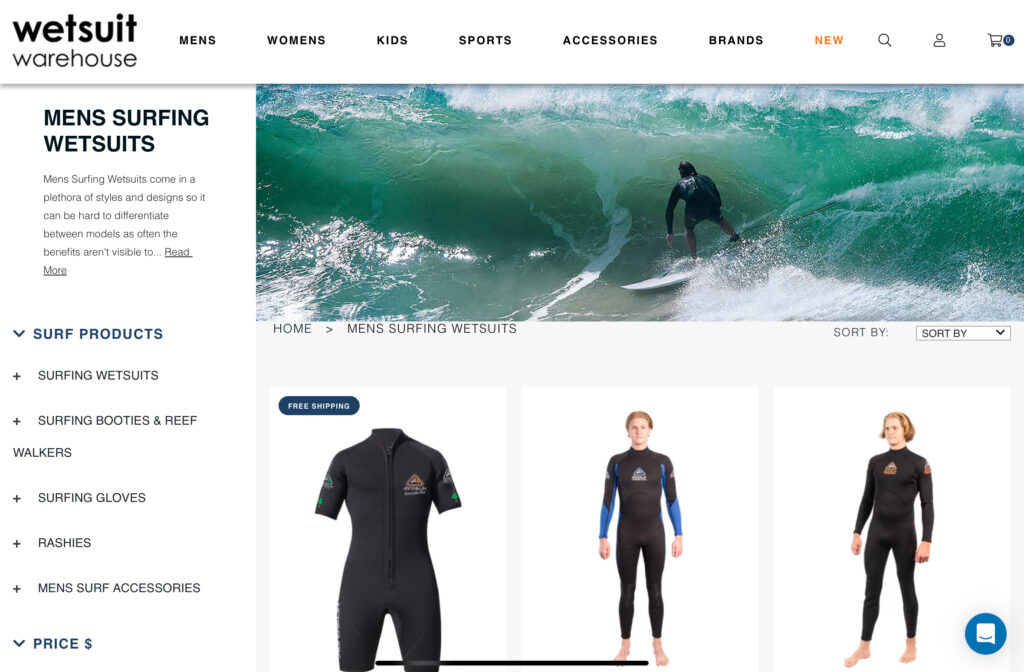
Despite not having the highest authority score or the deepest backlink profile, Wetsuit Warehouse continues to lead. Its keyword alignment is clean, its category structure is logical, and its internal linking makes it easy for both users and search engines to navigate.
A traditional brand can begin to lose ground here if category pages rely too heavily on brand recognition and lack supporting educational content, strong internal linking, or clearly structured copy that reinforces topical authority.
Trend insight: For broad head terms, Google is rewarding category architecture and authority signals working together.
Best wetsuits for surfing
This is a commercially weighted comparison query that strongly favours depth. Unlike “surfing wetsuit,” this term leans heavily into research intent. Users are looking for rankings, validation, reviews, and lived experience before making a decision.
The keyword receives approximately 70 monthly searches. Its CPC is $1.64, the highest of all four terms, which signals strong buying intent. The SEO difficulty is 19, technically lower than “surfing wetsuit,” yet structurally harder because the SERP is dominated by editorial content rather than brand product pages.
The current top results are:
- The Inertia
- Stab Mag
- Go Surf Perth
- Wetsuit Warehouse
The Inertia and Reddit remain from 2024, while O’Neill has slipped out of the top five. This SERP is now almost entirely editorial and community driven. These domains carry strong authority and significant backlink profiles compared to most wetsuit brands.
This reflects a broader shift we are seeing across industries. Google increasingly favours experience led, opinion based content for “best” queries. Community validation and real world testing carry weight, which explains why Reddit continues to perform strongly.
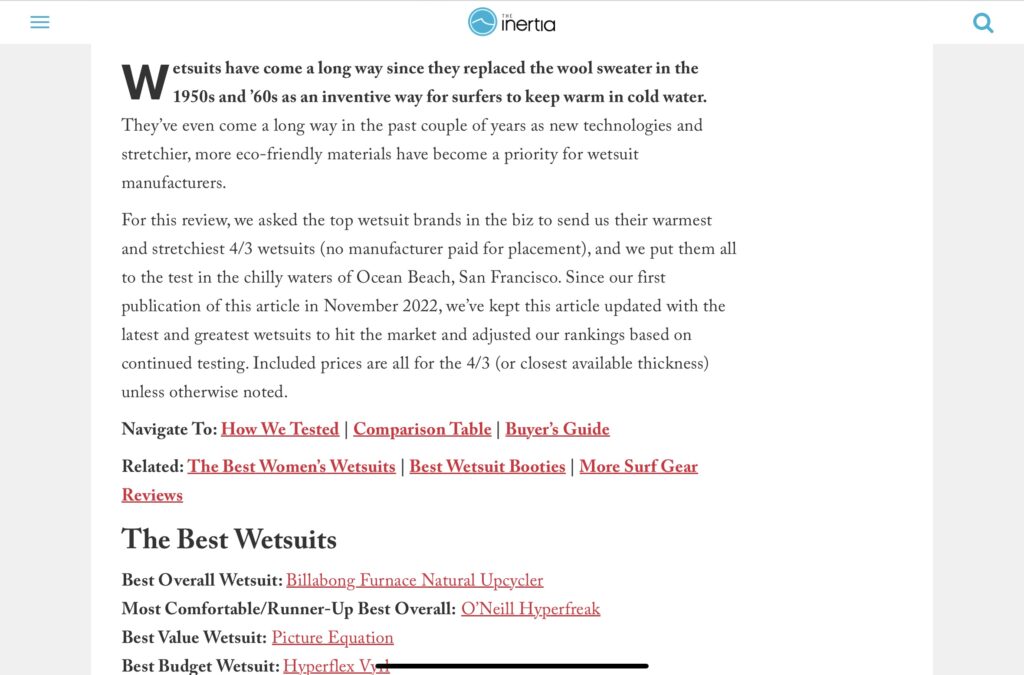
For brands wanting to compete here, publishing a structured buying guide would be a logical step. Comparison tables, FAQs, schema markup, and genuine testing insights could help close the gap. Product pages alone are unlikely to win this space.
If a brand has slipped, it may be due to limited content freshness, a lack of structured comparison content, or insufficient authority compared to media publishers.
Trend insight: To rank for “best” queries, brands need to think like publishers.
Cold water wetsuit
“Cold water wetsuit” is more technical and condition focused. It rewards clarity around thickness, seam construction, lining materials, and performance in lower temperatures. This is where well structured subcategory pages can outperform general listings.
The term receives approximately 50 monthly searches, has a CPC of $0.88, and a low SEO difficulty of 14. From a numbers perspective, this is the most accessible keyword in the review.
The current SERP is:
- Wetsuit Warehouse
- Xcel Wetsuits
- O’Neill
- Speedo
Only Wetsuit Warehouse and Xcel Wetsuits remain from 2024, with Isurus dropping out.
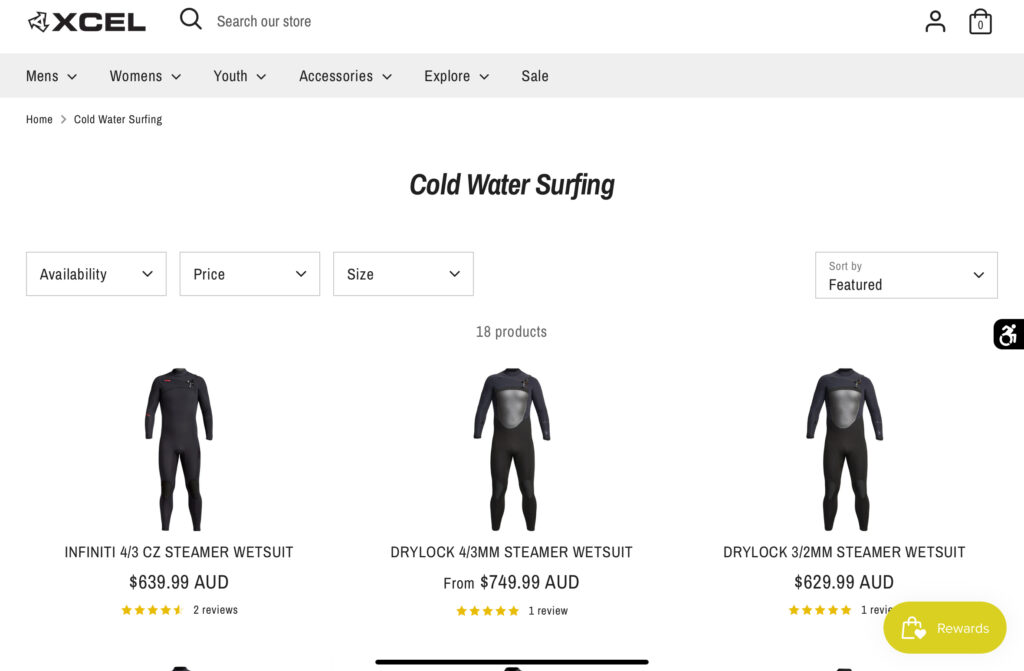
Eighteen months ago, smaller niche brands could compete through tight keyword targeting. In 2026, larger brands with stronger authority signals such as O’Neill and even broader sports brands like Speedo are gaining ground.
This suggests domain strength and overall authority are beginning to outweigh narrow optimisation.
Isurus’ departure may indicate slowing backlink growth or limited content refresh signals, particularly if competitors have continued updating category copy, expanding ranges, and strengthening internal linking.
Brands could strengthen visibility here by building structured subcategory hubs around wetsuit thickness and water temperature, for example 3/2mm, 4/3mm, and 5/4mm variations. This approach captures long tail intent while reinforcing depth within the cold water segment.
Trend insight: Authority is compounding, and niche optimisation alone is no longer enough.
Eco friendly wetsuits
This is the lowest volume but most competitive term analysed.
“Eco friendly wetsuits” receives around 10 monthly searches (I’m not confident of this figure whatsoever), yet the SEO difficulty sits at 43. That combination tells an important story. This SERP is not driven by volume, it is driven by authority and topical credibility.
Current rankings are:
Project Blank, Vissla, and Srface remain from 2024. Abysee Australia has dropped out, while Patagonia has entered.
The arrival of Patagonia is significant. When a brand with that level of sustainability credibility enters a SERP, it raises the authority threshold for everyone else.
This SERP has remained relatively stable, which suggests Google recognises sustained topical investment in sustainability. The brands holding visibility here, particularly Project Blank, Srface, and Patagonia, support their rankings with detailed content around Yulex and dedicated sustainability sections that extend beyond individual product pages.
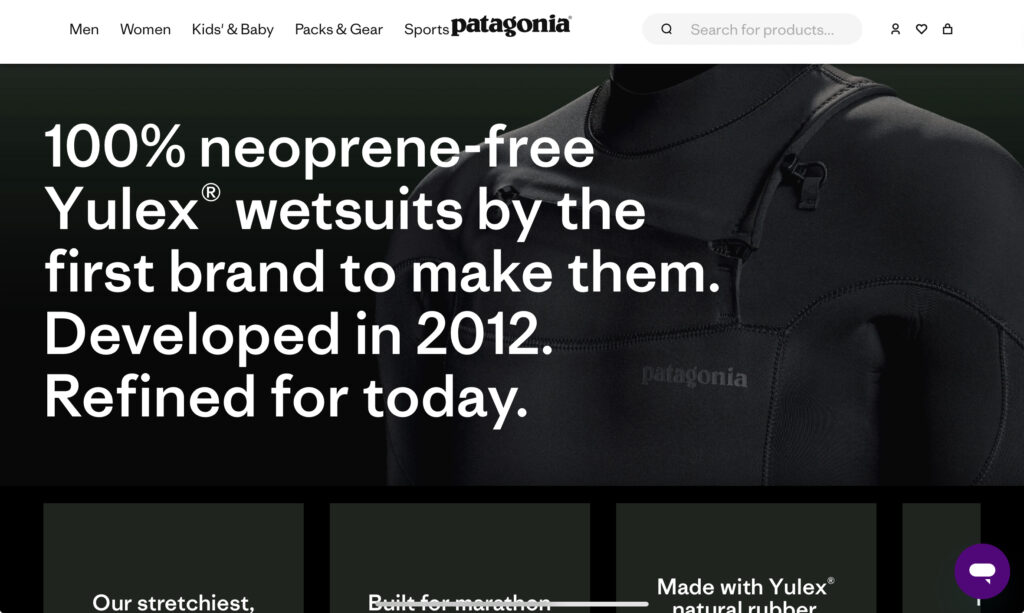
Surface level eco tagging is unlikely to perform. Without depth, documentation, and consistent thematic coverage, it is difficult to build the topical authority required to rank in this space.
Trend insight: Sustainability SEO rewards brands that treat it as a core narrative, not a marketing add on.
Conclusion
Eighteen months on, the wetsuit SEO landscape feels more mature.
Broad commercial terms continue to reward strong category architecture and retailer depth. “Best” queries are clearly editorial driven, with Google favouring experience and community validation. Technical niche terms now require both optimisation and authority. Sustainability remains the most strategic long term opportunity, with depth separating genuine leaders from surface level positioning.
For surf brands, the takeaway is simple.
SEO is no longer about ranking a single product page.
It is about building authority across intent clusters.
Brands that invest in structured content, technical clarity, buying guides, and thematic depth will continue to strengthen their visibility as competition intensifies.